
- Published on
Its vs. It's: The One Apostrophe Rule You Need to Know
- Authors

- Name
- Tony
- @shyeditor
What Is the Difference Between Its and It's?
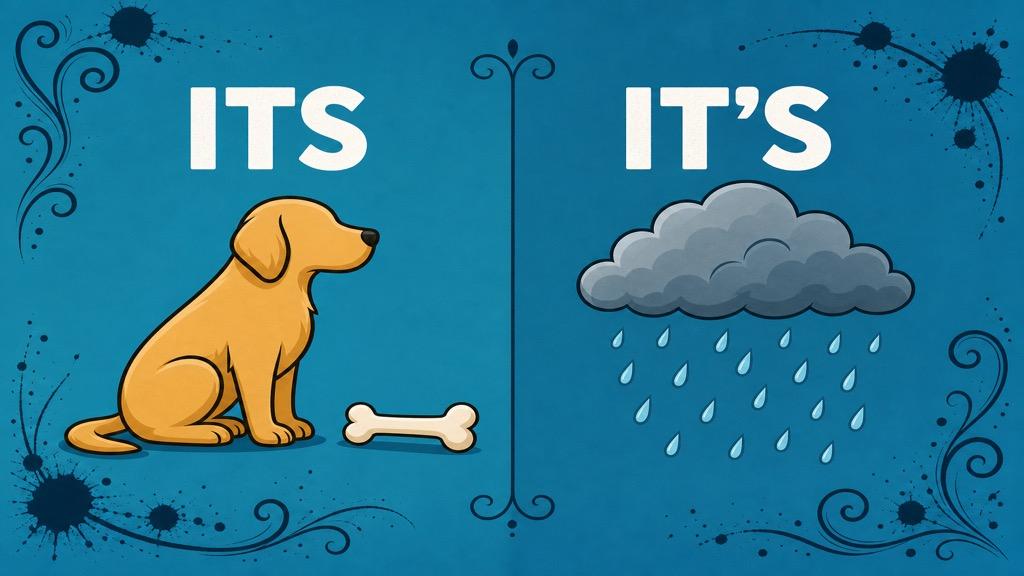
"It's" is a contraction of "it is" or "it has." "Its" is the possessive form of "it," meaning something belongs to it. That's the whole rule. If you can replace the word with "it is" or "it has" and the sentence still makes sense, use "it's." If not, use "its."
- Its = belonging to it. "The cat licked its paw."
- It's = it is / it has. "It's raining outside." / "It's been a long day."
Why Is Its vs It's So Confusing?
This mix-up exists because the rule breaks a pattern you've already learned. In English, apostrophes usually signal possession: "Sarah's book," "the company's policy," "the dog's bone." So when you want to show that something belongs to "it," your brain reaches for "it's" by instinct. But "it's" is already taken - it's a contraction. The possessive form, "its," has no apostrophe at all. It follows the same pattern as other possessive pronouns: his, hers, ours, yours, theirs. None of them use apostrophes, and neither does "its."
How Do You Use "Its" Correctly?
"Its" is a possessive determiner, just like "his" or "her." It tells the reader that something belongs to or is a feature of the thing you're talking about. If you can swap in "his" or "her" and the sentence still works, "its" is the right choice.
When Should You Use "Its" in a Sentence?
Use "its" when describing something that belongs to or is associated with a non-human subject (or a subject whose gender isn't specified):
- "The company revised its hiring policy."
- "The tree lost its leaves in October."
- "Every country has its own customs."
- "The software crashed during its update."
What Are Common Mistakes With "Its"?
The most frequent error is adding an apostrophe when ownership is intended:
- Wrong: "The team celebrated it's victory."
- Right: "The team celebrated its victory."
Try replacing it with "it is": "The team celebrated it is victory" makes no sense, so "it's" is wrong here.
How Do You Use "It's" Correctly?
"It's" always means "it is" or "it has." The apostrophe replaces the missing letters. If you can expand the word to "it is" or "it has" and the sentence still reads naturally, "it's" is correct. If the expansion sounds wrong, you need "its."
What Are Examples of "It's" in a Sentence?
As "it is":
- "It's cold outside." (It is cold outside.)
- "It's the best option we have." (It is the best option we have.)
- "I think it's time to leave." (I think it is time to leave.)
As "it has":
- "It's been three years since we last met." (It has been three years.)
- "It's got a scratch on the side." (It has got a scratch.)
- "It's taken longer than expected." (It has taken longer.)
Why Does the Expansion Test Always Work?
The apostrophe in "it's" exists for exactly one reason: it marks where letters were removed when "it is" or "it has" was shortened. This means "it's" can always be expanded back without changing the meaning. The possessive "its" never works this way. That makes the expansion test completely reliable, every single time.
What Is the Fastest Way to Tell Its and It's Apart?
Two checks, two seconds:
- Can you expand it to "it is" or "it has"? Use it's. "It's raining" = "It is raining."
- Does it show that something belongs to something? Use its. "The dog chased its tail" = the tail belonging to the dog.
What Memory Tricks Help With Its vs It's?
- Possessive pronouns never have apostrophes. His, hers, yours, theirs, ours, its. No apostrophe in any of them.
- "It's" = "it is." Always. If the expansion works, add the apostrophe. If it doesn't, leave it off.
- Think of "it's" as "it [i]s." The apostrophe is standing in for the missing letter, not signaling possession.
Does Getting Its vs It's Wrong Actually Matter?
In a text to a friend, nobody will correct you. But this is one of the most noticed grammar errors in professional writing, precisely because the rule is so simple.
How Does This Mistake Look in Professional Settings?
Consider these scenarios:
- Company website: "Our platform and it's features." Every visitor who knows the rule will notice, and many will question the professionalism of the business.
- Business proposal: "The project exceeded it's budget by 15%." A small error that signals carelessness in a document meant to build trust.
- Published article: "The city is known for it's nightlife." Readers lose a small amount of confidence in the writer's authority.
Because the its/it's rule is taught early and repeated often, getting it wrong in polished writing stands out more than many obscure grammar mistakes would.
Can Grammar Tools Catch This Mistake?
Standard spell checkers won't flag it because both "its" and "it's" are correctly spelled words. The error is about meaning, not spelling. You need a tool that understands context. Shy Editor catches these contextual errors automatically by analyzing what you mean, not just what you typed.
If you've mastered its vs it's, you'll find the same apostrophe logic applies to your vs you're - another pair where the contraction gets confused with the possessive. And if you're working on tightening up your writing overall, our self-editing checklist covers the most common errors to watch for in a final pass.
How Do You Handle Its vs It's in Formal Writing?
The rules stay identical in formal writing, but the expectations for correctness are higher. Academic papers, legal documents, and published work are scrutinized more closely.
What About Academic and Business Writing?
In academic writing:
- "The study examined the virus and its mutation rate."
- "It's important to note the limitations of this methodology."
- "The dataset lost its integrity during transfer."
In business contexts:
- "The department must justify its budget request."
- "It's expected that Q4 results will improve."
- "The system has exceeded its projected lifespan."
Is "Its" Ever Used With an Apostrophe for Possession?
No. There is no situation in standard English where "it's" is possessive. This is an absolute rule with zero exceptions. "Its" (no apostrophe) is always the possessive. "It's" (with apostrophe) is always "it is" or "it has." If you remember nothing else from this article, remember that.
Quick Reference: Its vs It's
| Word | Meaning | Test | Example |
|---|---|---|---|
| Its | Belonging to it | Replace with "his" or "her" | The cat cleaned its fur. |
| It's | It is / It has | Expand to "it is" or "it has" | It's getting late. |
Practice Sentences
Test yourself - which is correct?
- "The restaurant is famous for _____ pasta." - its (the pasta belonging to the restaurant)
- "_____ been ages since I've been here." - It's (it has been ages)
- "The phone lost _____ charge overnight." - its (the charge belonging to the phone)
- "_____ never too late to start." - It's (it is never too late)
- "The company announced _____ quarterly earnings." - its (earnings belonging to the company)
- "_____ the thought that counts." - It's (it is the thought)
Write With Confidence
Its vs it's trips up even experienced writers because the rule contradicts an otherwise reliable English pattern. Shy Editor catches contextual errors like these before they reach your reader, whether you're drafting a quick email or polishing a formal report. Try it free: https://www.shyeditor.com